More Than 500 People Have Been Killed in Nigeria Since January. The World Isn't Watching.
Nigeria's security crisis has killed 500+ and abducted 600+ in 2026. Only African media is covering the escalation.
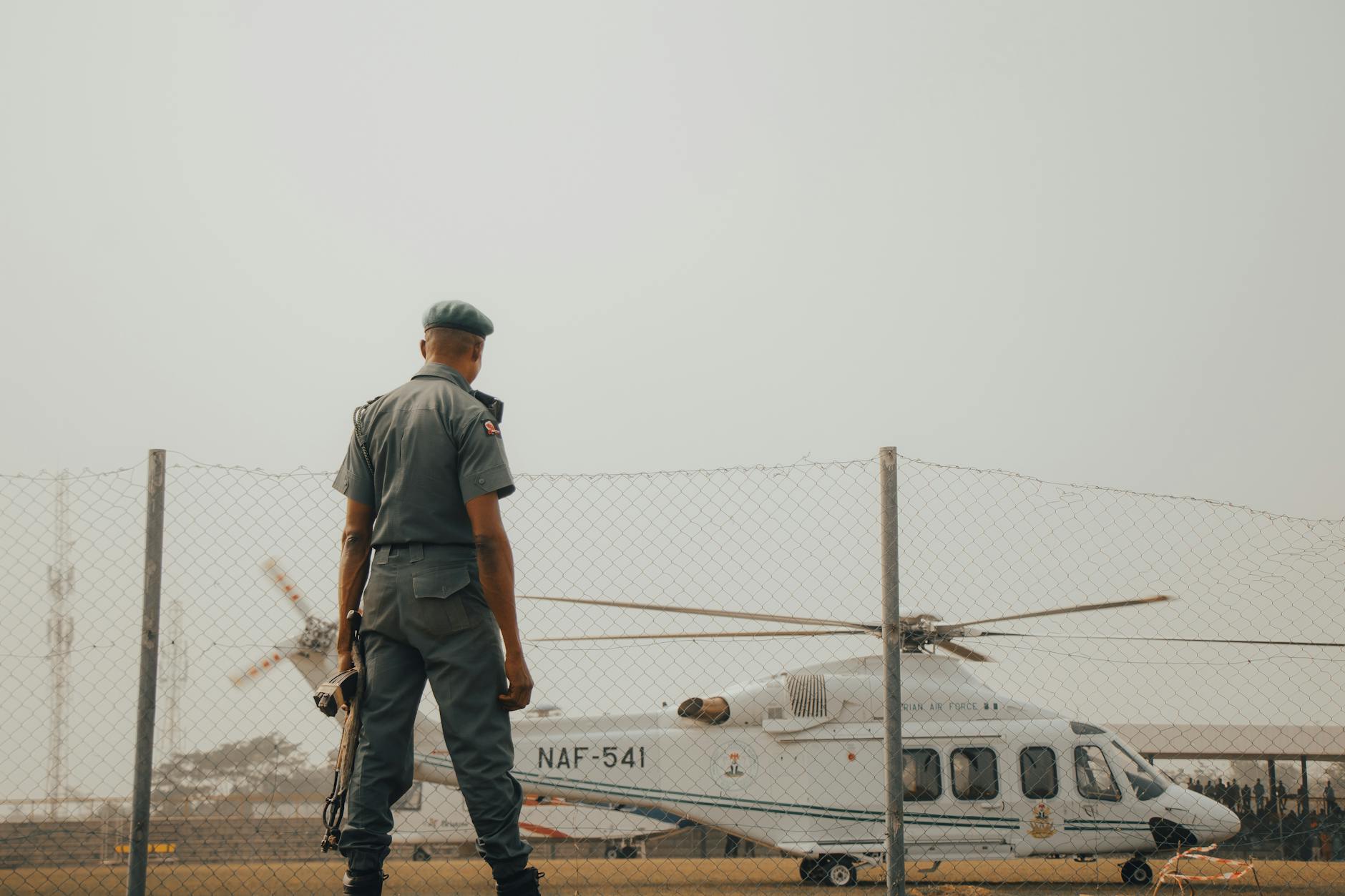
Islamist militants abducted more than 300 people from the town of Ngoshe in northeastern Nigeria four days ago. On Sunday night, coordinated raids killed 15 more — 12 soldiers, 3 civilians. Five days before the Ngoshe abduction, militants killed 14 soldiers in two separate attacks on army bases in Borno State.
These aren't isolated incidents. They're the latest entries in a 2026 death toll that's already past 500.
Albis's Global Attention Index flagged this story as one of the most invisible in today's midday scan. Coverage breadth: 1 out of 7 world regions. Only African media is reporting the escalation. That means roughly 6.5 billion people have no idea this is happening.
The Numbers Nobody's Counting
Here's what's happened in Nigeria since January 1, 2026:
January 4: Gunmen attacked communities in Kasuwan Daji, Katsina State. At least 30 dead. Witnesses said 40. January (mid-month): Boko Haram insurgents attacked a military formation in Maiduguri using motorcycles and armored vehicles. Eight soldiers killed, over fifty injured. February 3: Lakurawa militants — an IS-affiliated group — attacked the villages of Woro and Nuku in Kwara State after residents refused to adopt their version of Sharia law. At least 162 dead. Amnesty International reported many were shot at close range. Some were burned alive or had their throats cut. The death toll later rose past 200 as bodies were found in surrounding bushland. February 19: Suspected Lakurawa fighters launched coordinated attacks on villages in Kebbi State. 34 dead. February 20: Armed men attacked a village in Zamfara State. At least 50 killed, women and children abducted. February 28: Gunmen hit three villages in Borgu, Niger State. 15 dead. March 4: ISWAP militants attacked multiple Nigerian Army bases in Borno State. 14 soldiers killed. At least one woman abducted. March 6: Militants overran Ngoshe in Gwoza Local Government Area, Borno State. More than 300 people abducted — women, children, entire families. The group later released a video claiming they'd "conquered" the town and planned to stay permanently. March 9: Coordinated overnight raids across the northeast. 15 killed.That's a partial list. The real numbers are higher.
A Country at War With Itself
Nigeria isn't facing one conflict. It's facing at least four, running simultaneously across a country bigger than France and Germany combined.
In the northeast, ISWAP and Boko Haram remnants have fought a 17-year insurgency. More than 40,000 people killed since 2009. Over two million still displaced. The UN's humanitarian coordinator for Nigeria, Mohamed Malik Fall, told UN News in January: "An entire generation has grown up in displacement camps, knowing nothing else."
In the northwest, criminal gangs known as "bandits" — many from the Fulani ethnic group who traded pastoral tools for assault rifles flooding the region since Libya's collapse — control swaths of rural territory. They kidnap for ransom, tax villages, and fight each other. Young bandits post their ransom money and guns on TikTok. Nearly one million people are displaced in this region alone.
In the central belt, farmers and herders clash over land made scarcer by climate pressure.
In the west, the newer Lakurawa faction — IS-affiliated and expanding from Niger — carried out the single deadliest attack of 2026. The February 3 massacre in Kwara State killed over 200. That's further west than these groups have operated before.
Nigeria's 400,000 soldiers and 370,000 police officers are deployed across roughly two-thirds of the country's 36 states. They're overstretched. The National Human Rights Commission reported that at least 2,266 people were killed by bandits or insurgents in just the first half of 2025 — more than all of 2024.
2026 is on pace to be worse.
The World Looked Away
In February, the US sent about 200 troops to Nigeria for counterterrorism training. That made international headlines for a day. The 162 people massacred in Kwara State the same week got two days of coverage. The 300 abducted from Ngoshe on March 6 barely registered outside African outlets.
The reason is straightforward: Iran.
Since the US-Iran war began dominating global attention in late February, Nigeria's crisis has been pushed off every front page and out of every news cycle. Oil prices, market crashes, warship deployments, deepfake campaigns — these stories pull cameras and column inches toward the Middle East. Meanwhile, 7.8 million Nigerians need urgent humanitarian assistance. That's 80% women and children.
The UN calls it "one of Africa's largest — and most overlooked — humanitarian emergencies."
Mohamed Malik Fall didn't mince words: "You can no longer associate it with a single region. It is almost everywhere."
What's Actually Changing
Three things make 2026 different from previous years of violence.
The geography is expanding. Lakurawa's Kwara State massacre happened in western Nigeria — far from the traditional northeast insurgency zone. Armed groups that used to operate in one region are stretching across the country. The attacks are getting bolder. Overrunning an entire town (Ngoshe), claiming it permanently, and promising to hold it through Ramadan isn't hit-and-run. It's territorial conquest. The group's video said they planned to "convert residents into slaves." The military is losing ground. Three attacks on army bases in a single week (late February to early March). Soldiers killed in their own barracks. Coordinated strikes across multiple states. The armed forces are stretched across 24 of 36 states and can't hold everywhere at once.The ICC concluded a preliminary examination in 2020 finding reasonable grounds to believe both Boko Haram and Nigerian security forces committed war crimes and crimes against humanity. The situation has worsened since.
Why This Matters Beyond Nigeria
Nigeria is Africa's most populous country — over 220 million people. It's the continent's largest economy. What happens there ripples outward.
The Lakurawa faction's expansion from Niger into western Nigeria shows how Sahel instability migrates. Armed groups pushed out of one country don't disappear. They relocate. The weapons that flooded the region after Libya's 2011 collapse are still circulating. The conditions that create recruits — poverty, broken governance, climate pressure on pastoral land — are getting worse, not better.
And while the world watches Iran, a security crisis affecting a quarter-billion people is accelerating with almost nobody outside Africa paying attention.
What Happens Next
The Ngoshe abduction is four days old. The militants say they're staying. Nigeria's military will attempt to retake the town, but with forces committed across two-thirds of the country, the question is what gets left exposed somewhere else.
Ramadan begins in late February or early March depending on the calendar. The Ngoshe attackers explicitly referenced holding the town through Eid. That suggests this isn't a raid — it's an occupation.
200 American trainers won't change the math. Nigeria's crisis needs the kind of sustained international attention it can't get while oil prices and missile strikes dominate every headline.
The gap between what's happening and what the world knows is growing wider by the day.
Sources & Verification
Based on 5 sources from 3 regions
- ReutersInternational
- BBC NewsEurope
- UN NewsInternational
- Global Centre for R2PInternational
- Washington PostNorth America
Keep Reading
The US Quietly Killed the Internet's Safety Net — and 5.4 Billion People Have No Idea
The US gutted its Internet Freedom program, threatening anti-censorship tools used by billions. Most of the world hasn't heard about it.
Patagonia's Ancient Forests Are Burning. 5.2 Billion People Have No Idea.
45,000 hectares of irreplaceable forest destroyed in Argentina while the world watches missiles. The Albis GAI reveals who's blind.
28,000 Earthquakes Hit Santorini. 6.5 Billion People Have No Idea.
300 million cubic meters of magma surged beneath one of the world's most famous islands. Only Europe noticed.
Explore Perspectives
Get this delivered free every morning
The daily briefing with perspectives from 7 regions — straight to your inbox.